Hunters launch their first attack on the pack
Broken Rejected MateHunters launch their first attack on the pack when Sierra Langford, Alan Lowell, Anthony Lowell, and Andrew Lowell encounter two armed humans during a run in the woods. The attack transforms a euphoric display of Sierra’s superior speed into a fight for survival, exposing the hunters’ explicit order to kill her and placing the pack’s longstanding hostility toward Dysomnias beside a more immediate question: whether the young woman can be protected as a person rather than destroyed as a category.
Causes and Background
The confrontation begins after Sierra and the three Lowell cousins run together in wolf form. Sierra’s wolf has begun to recognize the twins as allies because Anthony Lowell and Andrew Lowell helped save her earlier, and the run briefly creates an atmosphere of shared acceptance. Sierra outruns the others, turning the chase into a race through the trees, until an unfamiliar scent makes her slow from a run to a trot. Alan’s wolf becomes alert before the threat is fully visible and moves toward her, placing his body between Sierra and whatever is approaching.
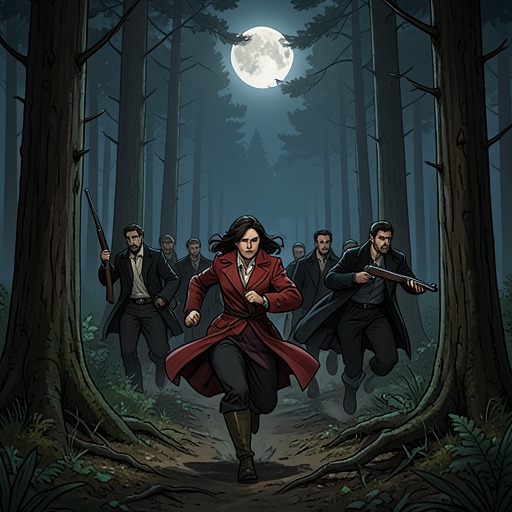
The strangers are a man and a woman dressed in leather, with numerous tattoos on their arms and legs and swords strapped across their backs. Their appearance identifies them not as ordinary humans passing through the woods but as hunters prepared for combat. The woman’s remark about Sierra having “little male protectors” and the man’s confusion that the three wolves are ordinary werewolves reveal that the hunters understand the division between ordinary werewolves and Dysomnias. Their orders override that distinction: the woman states that they have been instructed to kill Sierra.
The assault also enters a wider structure of pack suspicion and political danger. Alan, Anthony, and Andrew Lowell are close enough to describe themselves as nearly brothers, yet their shared destiny includes a future struggle over who will become alpha. Alan has already decided that he intends to win and does not fully trust the twins, fearing that they may have inherited more than the good qualities of their father. Against that background, the hunters’ arrival tests whether private ambition will yield to collective obligation. Alan’s later defense of Sierra makes the principle explicit: he invokes the cousins’ promise to protect one another’s mates and insists that Sierra is his mate, not an enemy to be abandoned.
The First Clash
The hunters act immediately once their orders are stated. Alan Lowell charges the woman, but she avoids him and kicks him into a tree, leaving him whining against the trunk as both hunters draw their swords. The assault therefore becomes personal before it becomes strategic: Sierra’s anger rises not only from the threat against her but from seeing her mate treated as helpless prey. She yields control to her wolf, and the change in consciousness turns the encounter into a dangerous contest between trained violence and instinctive fury. While Sierra engages the huntress, Anthony Lowell and Andrew Lowell take on the male hunter, and Alan remains temporarily incapacitated. Sierra’s human awareness survives only in fragments, watching as her wolf slashes at the huntress’s legs and evades the first sword strokes. The huntress answers with a sweeping attack that cuts through Sierra’s fur, producing a pain-sharp howl without stopping her advance.
The fight’s momentum turns when Sierra’s wolf knocks the huntress to the ground and bites into the side of her stomach. The attack is not yet a victory, because Sierra notices that Anthony Lowell and Andrew Lowell are struggling against the male hunter while Alan Lowell has recovered and rejoined the battle. Concern for the others distracts her at the precise moment when the huntress finds another opening. She prepares to drive her sword into Sierra’s heart, but Alan’s wolf reaches them in time and shoves Sierra aside, taking the protective role that had defined his first response to the hunters. The rescue also confirms the practical force of the cousins’ promise: the battle is no longer a private confrontation with Sierra as its target, but a collective defense in which each fighter becomes responsible for the others.
Injury, Retreat, and Immediate Consequences
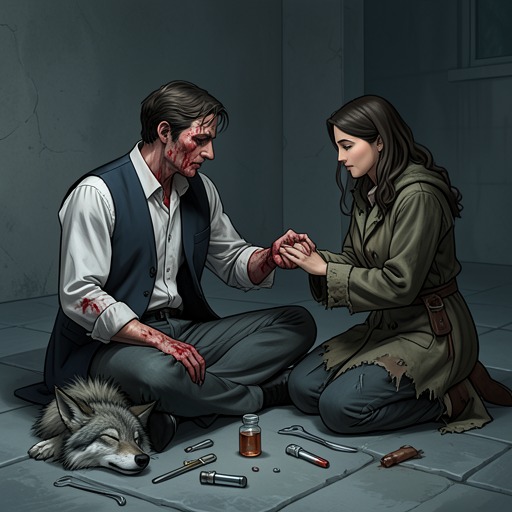
The hunters’ advantage becomes unmistakable when a pain-stricken howl draws Sierra Langford, Alan Lowell, Anthony Lowell, and Andrew Lowell toward Anthony Lowell’s fallen wolf. The male hunter has broken one of Anthony’s legs and cut his paw so severely that the pain forces him to return to human form; Andrew Lowell shifts as well, remaining beside his twin rather than continuing the fight alone. Sierra’s wolf wants to retaliate, but the opportunity disappears before revenge can be taken. When the group turns back, both hunters have fled, leaving Andrew to help his injured brother limp toward pack grounds while Sierra and Alan remain in wolf form, guarding against another attack.
The retreat does not restore safety. Sierra shifts once they reach the pack and leaves without telling Alan Lowell where she is going because she cannot bear to watch Anthony suffer. Although she believes Anthony will recover, she also assumes that the others will blame her, and she blames herself. The encounter therefore produces a second wound beyond the physical injuries: Sierra begins to understand her presence as a danger to those who protect her. That guilt drives her away from the people who might reassure her and returns her to her father, Doherty Langford, who is waiting outside their house in agitation.
The attack also changes the meaning of Sierra’s relationship with the pack. Before the hunters appear, her speed and unfamiliar wolf nature can be treated as extraordinary but exhilarating; afterward, her identity as a Dysomnia becomes a direct reason for organized violence. Ronald Lowell claims that killing Dysomnias is wasteful and argues that Alan’s ability to calm Sierra means she may not harm anyone if Alan remains with her, but the hunters’ order to kill her proves that not everyone accepts such conditional protection. Alan’s insistence that she is an eighteen-year-old trying to live, and his demand that his cousins honor their promise to protect one another’s mates, turns the attack into a test of whether the pack’s rules can overcome inherited hatred.
The hunters’ disappearance is only a temporary interruption. Their return to the Langford home confirms that the first encounter was not an isolated clash but the opening move in a campaign against Sierra and the people around her. The huntress later strikes Doherty Langford through the chest with a sword while he steps in front of Sierra, and Sierra kills the attacker with that same weapon after achieving an impossible human-form transformation in which her wolf takes control without a full shift. The first attack thus foreshadows a widening cycle of pursuit, sacrifice, and retaliation: Anthony Lowell survives his injuries, but the pack’s supposed refuge has been exposed, and Doherty’s death makes the cost of protecting Sierra irreversible.
The Attack as a Test of Pack Ethics
The hunters’ order to kill Sierra Langford turns a dispute over Dysomnia identity into a test of the pack’s obligations. Ronald Lowell argues that killing Dysomnias is wasteful because Alan Lowell has proved capable of calming Sierra when she enters a wolf state, but that conditional tolerance remains fragile: it depends on Alan’s presence and on the assumption that Sierra can be controlled. The hunters reject even that narrow possibility. Their explicit command to kill the girl treats her existence as sufficient cause for execution, while Alan’s response insists on a different standard. He identifies Sierra as an eighteen-year-old trying to live and invokes the pact among himself, Anthony Lowell, and Andrew Lowell to protect one another’s mates. In doing so, he places personal loyalty and pack promises against inherited fear, demanding that the twins behave as decent werewolves rather than reproduce the hostility directed at Dysomnias.
The confrontation also exposes how protection is distributed through several overlapping bonds. Alan Lowell shields Sierra with his body before the hunters attack, later pushes her away from a sword aimed at her heart, and defends her even though his relationship with Anthony Lowell and Andrew Lowell includes an eventual struggle over the alpha position. Their closeness is therefore never simple: the cousins share a common destiny and a bond almost like brotherhood, but Alan still expects one day to fight them for leadership and does not fully trust what they may have inherited from their father. The hunters’ arrival briefly suspends that rivalry. Anthony Lowell and Andrew Lowell fight together against the male hunter, Andrew remains beside his injured twin, and Alan returns to the battle after being thrown against a tree. The immediate danger makes their mutual promises more powerful than their political ambitions, even while the possibility of future conflict remains beneath the alliance.
Sierra’s own conduct complicates the ethics of protection. Her wolf responds to the hunters through scent, speed, pain, and rage before her human consciousness can fully direct the fight. She lets the wolf take control after seeing Alan attacked, then loses much of her human awareness during the struggle. When she later notices Anthony Lowell’s injuries, concern interrupts her bloodlust and gives the huntress an opening. After the hunters escape, Sierra shifts back and withdraws alone, convinced that Anthony’s suffering will be blamed on her. The first attack consequently leaves her caught between two interpretations of her body: to the hunters, she is a target whose category justifies death; to Alan, she is a mate entitled to protection; to herself, she is increasingly a danger to the people who stand beside her.
The Attack as a Threshold in Sierra’s Identity
The first assault makes Sierra Langford’s body the contested ground on which competing definitions of personhood, danger, and belonging collide. The hunters see only a Dysomnia marked for execution, while Alan Lowell insists that she is an eighteen-year-old trying to live and therefore deserves the same protection as any other member of the pack. Sierra herself experiences the conflict physically before she can interpret it: an unfamiliar scent interrupts the exhilaration of the run, her wolf reacts to the attack on Alan, and her human awareness recedes as instinct takes command. Her speed, claws, teeth, and capacity to endure a sword wound make her formidable, but the episode also reveals the cost of that power. Concern for Anthony Lowell and Andrew Lowell disrupts her focus, and her later guilt drives her away from the injured Anthony rather than toward the support of the pack. The hunters’ attack therefore marks more than the beginning of open hostilities. It is the moment when Sierra’s emerging wolf identity becomes inseparable from political persecution, reciprocal protection, and the fear that survival may endanger the people she loves.
The first attack also establishes that the hunters’ violence is organized rather than spontaneous. Their leather clothing, tattoos, swords, and explicit orders show a prepared enforcement network that treats Sierra Langford’s Dysomnia identity as grounds for execution. The encounter’s value shift is immediate: the run begins as a moment of exhilaration and tentative social belonging, with Sierra’s wolf racing ahead of the others, but the discovery of the hunters converts movement into entrapment and speed into a survival advantage. The hunters’ assumption that ordinary werewolves should hate Dysomnias reveals the ideological expectation behind the attack, while Alan Lowell’s decision to place his body between Sierra and the threat rejects that expectation in action. What follows is therefore both a physical ambush and a collision between two social orders: one built on categorical extermination, and another still uncertain but increasingly compelled to recognize Sierra as a person, a mate, and someone whose life carries obligations for the entire pack.
The first attack also establishes that the hunters’ violence is organized rather than spontaneous. Their leather clothing, tattoos, swords, and explicit orders show a prepared enforcement network that treats Sierra Langford’s Dysomnia identity as grounds for execution. The encounter’s value shift is immediate: the run begins as a moment of exhilaration and tentative social belonging, with Sierra’s wolf racing ahead of the others, but the discovery of the hunters converts movement into entrapment and speed into a survival advantage. The hunters’ assumption that ordinary werewolves should hate Dysomnias reveals the ideological expectation behind the attack, while Alan Lowell’s decision to place his body between Sierra and the threat rejects that expectation in action. What follows is therefore both a physical ambush and a collision between two social orders: one built on categorical extermination, and another still uncertain but increasingly compelled to recognize Sierra as a person, a mate, and someone whose life carries obligations for the entire pack.
The first attack also exposes how protection operates through overlapping bonds rather than through a single, stable hierarchy. Alan Lowell shields Sierra Langford with his body when the unfamiliar presence appears, then later pushes her away from the huntress’s sword as it is aimed at her heart. His response is especially significant because his connection to Anthony Lowell and Andrew Lowell is not free of competition. The three cousins share a bond almost like brotherhood and a common destiny, yet Alan expects that they will eventually fight to determine who becomes alpha, and he has never fully trusted the twins. The hunters’ arrival temporarily places that rivalry beneath a more urgent obligation. Anthony Lowell and Andrew Lowell confront the male hunter together, Andrew stays with his injured twin, and Alan returns to the battle after being thrown against a tree. Their actions show that the promise to protect one another’s mates can still govern them when violence threatens the group.
The attack’s immediate aftermath also reveals the limits of solidarity. Anthony Lowell’s broken leg and badly cut paw force him out of wolf form, while Andrew Lowell shifts back beside him and helps him limp toward pack grounds. Sierra Langford’s impulse is revenge, but the hunters vanish before she can act, leaving the injured twin as the clearest proof that the pack’s defenses have been breached. Alan Lowell and Sierra remain in wolf form to guard against another approach, yet Sierra’s return to human form leads not to communal reassurance but to withdrawal. She leaves without telling Alan where she is going because she cannot bear to witness Anthony’s condition, convinced that the injury will be blamed on her and admitting that she blames herself. Protection has therefore preserved her life while also deepening her isolation: the promise binding the cousins together does not prevent Sierra from interpreting survival as another burden imposed on those around her.
The Attack’s Wider Consequences
The hunters’ disappearance does not restore safety. Their return to the Langford home confirms that the first encounter was the opening move in a campaign against Sierra Langford and the people protecting her. The huntress later attacks Doherty Langford with a sword while he steps in front of Sierra, and Sierra kills her with that same weapon after allowing her wolf to control her body without a full shift. The earlier battle therefore foreshadows an escalating cycle of pursuit, sacrifice, and retaliation: Anthony Lowell survives the first assault but suffers a broken leg and a severely cut paw, while Doherty’s later death makes the cost of protecting Sierra irreversible. The hunters’ violence also exposes how precarious conditional acceptance remains. Ronald Lowell argues that killing Dysomnias is wasteful because Alan Lowell can calm Sierra when she enters a wolf state, yet the hunters reject even that limited possibility and treat her identity alone as grounds for execution. Against this logic, Alan identifies Sierra as an eighteen-year-old trying to live and invokes the cousins’ promise to protect one another’s mates. The attack consequently becomes a threshold for the pack: it forces inherited hostility, private rivalry, and the practical obligations of loyalty into the same violent confrontation, while leaving Sierra caught between being defended as a person and fearing that her survival places everyone else in danger.
The Attack’s Wider Consequences
The first attack also establishes that the hunters’ violence is organized rather than spontaneous. Their leather clothing, tattoos, swords, and explicit orders show a prepared enforcement network that treats Sierra Langford’s Dysomnia identity as grounds for execution. The encounter’s value shift is immediate: the run begins as a moment of exhilaration and tentative social belonging, with Sierra’s wolf racing ahead of the others, but the discovery of the hunters converts movement into entrapment and speed into a survival advantage. The hunters’ assumption that ordinary werewolves should hate Dysomnias reveals the ideological expectation behind the attack, while Alan Lowell’s decision to place his body between Sierra and the threat rejects that expectation in action. What follows is therefore both a physical ambush and a collision between two social orders: one built on categorical extermination, and another still uncertain but increasingly compelled to recognize Sierra as a person, a mate, and someone whose life carries obligations for the entire pack.